

Colour Masterbatches Are Becoming a Design Language in Manufacturing
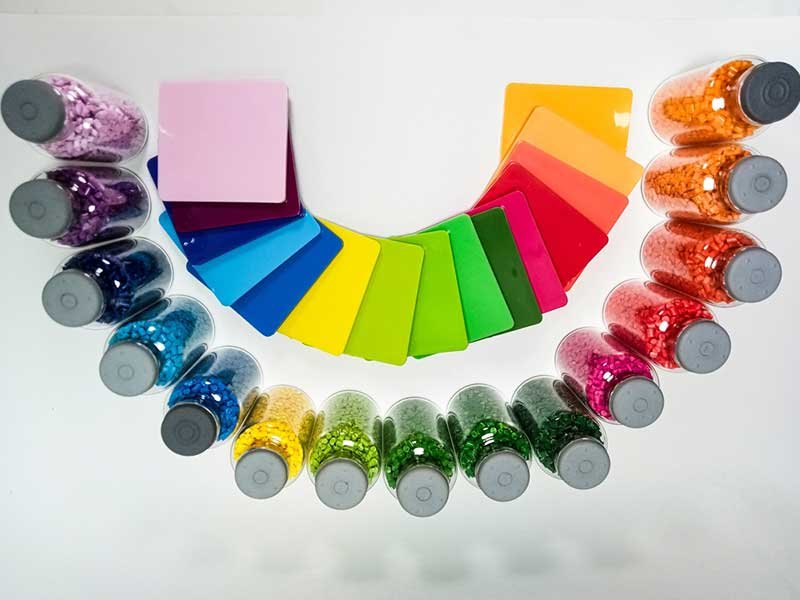
Across the plastics industry, colour has quietly shifted from an afterthought into a front-of-mind design decision and colour masterbatches are making that shift possible.
This isn’t just about aesthetics. Colour is becoming a language, a way for many to signal quality, communicate function, build brand recognition and even guide assembly. And when you combine it with the performance capabilities of engineering compounds, automotive compounds, conductive compounds and specialised masterbatches, you start to understand just how much thought goes into what most people assume is simply “the colour of plastic.”
What Colour Masterbatches Actually Do
Colour masterbatches are concentrated colour systems, pigments that get blended into plastic during processing to achieve a precise, repeatable shade.
The real value is consistency at scale. A single approved colour masterbatch formulation can be reproduced identically across millions of units, across multiple production lines and across different manufacturing sites in different countries.
Beyond basic colouring, many colour masterbatches today are formulated with additional functional properties. Some carry UV stabilisers, some improve surface finish and some are designed to work compatibly with technically demanding base materials like high-performance engineering compounds, where getting colour right is significantly harder than it is with commodity plastics.
Why Colour Precision Is Non-Negotiable in the Plastics Industry
Here’s a problem that manufacturers in the plastics industry know well: run the same product on two separate occasions, same mould, same line, same resin batch and the colour can still come out slightly different. Alone, each piece looks fine. Set them side by side, and the mismatch is obvious.
In consumer goods, appliances and packaging, that kind of inconsistency creates real commercial problems. Quality teams reject batches, and brand managers raise concerns. And the cost of reworking or scrapping a production run quickly outweighs.
Colour masterbatches address this at the formulation level. Once a shade is developed and validated, the masterbatch locks it in, removing variation from the equation and giving manufacturers the confidence to scale production without worrying about colour drift. In the plastics industry, that kind of reliability is what separates professional colour management from guesswork.
How Colour and Engineering Compounds Work Together
Today, manufacturers understand that colour and compound selection need to be aligned from the start. Some engineering compounds are inherently difficult to colour; certain high-temperature grades, glass-filled formulations and chemically resistant resins can all interfere with pigment dispersion or shift the final shade in unpredictable ways.
In complex assemblies, colour coding of components made from engineering compounds speeds up assembly, reduces errors and makes maintenance far simpler. It’s a use of colour that has nothing to do with branding and everything to do with practical efficiency.
Automotive Compounds and the Demand for Visual Consistency
The automotive sector pushes colour management harder than almost any other industry. When a customer sits inside a new vehicle, they experience an interior designed to create a specific feeling: premium, sporty, minimalist, warm. Achieving that feeling depends entirely on colour and finish consistency across every surface and those surfaces are made from many different automotive compounds with very different material properties.
Hard plastics, textured trims and structural brackets all need to visually harmonise even though they’re processed differently. That’s a significant colour engineering challenge. Colour masterbatches are developed specifically for each material type within the vehicle, ensuring that a specific part is read as the same shade even when they’re made from different automotive compounds on different production lines.
The Role of Filler Masterbatches in Colour and Cost Management
Filler masterbatches are another tool that manufacturers in the plastics industry use alongside colour systems, and they’re worth understanding because they interact directly with how colour behaves in a final product.
They’re added to improve stiffness, reduce material cost and enhance processing stability. But fillers also affect how colour develops in a compound; white mineral fillers in particular can lighten shades and shift colour balance in ways that need to be accounted for during masterbatch formulation.
For manufacturers working with both filler masterbatches and colour masterbatches in the same compound, getting the interaction right is part of the development process. When it’s done well, the result is a material that’s optimised on cost, performance, and appearance simultaneously, which is exactly what competitive manufacturing demands.
Colour Has Become Part of the Product’s Story
Colour is no longer applied at the end of the design process. It’s built into the product strategy from the beginning, alongside decisions about engineering compounds, automotive compounds, conductive compounds and filler masterbatches.
The consistency, the finish, the precision, these details tell a story about how seriously a manufacturer takes their craft.
Colour has already moved well beyond decoration. In today’s manufacturing environment, it’s a design language, and the companies that speak it fluently are the ones setting the standard.
- How Plastiblends Brings Colour Masterbatches to Life
- Masterbatches: The Backbone of Plastics
- How Masterbatches are Transforming Indian Plastic Industry
- White and Black Masterbatches Define More Than Colour
- How Flexible Plastic Packaging Is Redefining Consumer Convenience
- The Role of Black Masterbatch Manufacturers in Modern Plastics
- The Role of Filler Masterbatches in Effective Cost Control and Beyond
- Why White Masterbatch Manufacturers Are Key to Packaging and Product Aesthetics
- Inside the World of Flexible Plastic Packaging – Trends and Technologies
- The Role of Carbon Black Masterbatch in Modern Plastics
- From Automotive to Agriculture: Why Black Masterbatch Remains in Demand
- 5 Trends Transforming the Rigid Plastic Packaging Industry in the Long Term
- How Automotive Plastic Additives are Revolutionising Car Components
- Inside a Masterbatches Manufacturer’s Lab: The Science of Colour and Performance
- The PET Masterbatch Advantage in Modern Packaging
- The Rise of PP Masterbatch and How It’s Transforming Modern Manufacturing
- A Deep Dive into Carbon Black Masterbatch: Science, Applications & Innovation
- Inside the World of White Masterbatch Manufacturers
- The Real Reason Flexible Plastic Packaging Continues to Outpace Other Formats
- How Plastic Masterbatches Enable Consistency in an Inconsistent Market
- Thermoplastic Compounds and the New Definition of Material Flexibility
- Plastic Compounds and the End of Single-Property Plastics
- Additive Masterbatch Innovations Transforming Thermoplastic Compounds and Cable Insulation
- Flexible Plastic Packaging Explained: How Plastic Compounds and Masterbatches Drive Performance
- Inside Pharmaceutical Packaging: Why Additive Masterbatch and Colour Masterbatch Are Non-Negotiable
- The Science of Strength: Carbon Black Masterbatch, Conductive Masterbatch and Advanced Plastic Compounds
- Inside the Growth of Filler Masterbatches: Where Cost Efficiency Meets Performance in Plastic Compounds
- The Evolution of Plastic Masterbatch Manufacturers in India: From Commodity to Innovation Leaders
- Thermoplastic Compounds: The Backbone of Next-Gen Plastic Masterbatch Manufacturing
- White Masterbatches and the Science of Premium Aesthetics in Plastic Products
- From Concept to Component - How Engineering Compounds Are Redefining Material Performance Across Industries
- Invisible Protection - How Antioxidant Masterbatch Extends the Life of Plastics in High-Temperature Applications
- The Shift Toward Lightweighting: A Competitive Edge for Rigid Plastic Packaging Manufacturers
- What Automotive OEMs Look for in Black Masterbatch Manufacturers in 2026
- Colour Masterbatches Are Becoming a Design Language in Manufacturing
- Engineering Compounds: The Backbone of Modern Plastic Applications
- How Smart Compounding is Shaping Everyday Products
- Why the Automotive Industry Relies on Specialised Plastic Compounds Today
- Conductive Compounds in Automotive Electronics: Meeting the Demands of EV Components
- How Rigid Plastic Packaging Manufacturers Are Adapting to India's New Recycled Content Regulations
- How to Choose the Right PP Masterbatch for Packaging, Automotive, and Textile Industries
- What Are Thermoplastic Compounds and Why Do They Matter?
- Automotive Compounds: What Makes Modern Vehicles Lighter, Safer and More Durable
- Beyond Colour: How Masterbatch Producers Are Driving Material Performance
- Heat, Processing and Performance: Why Antioxidant Masterbatch Is Essential
- How Flexible Plastic Packaging Manufacturers Improve Products' Shelf Life