

Inside the World of White Masterbatch Manufacturers
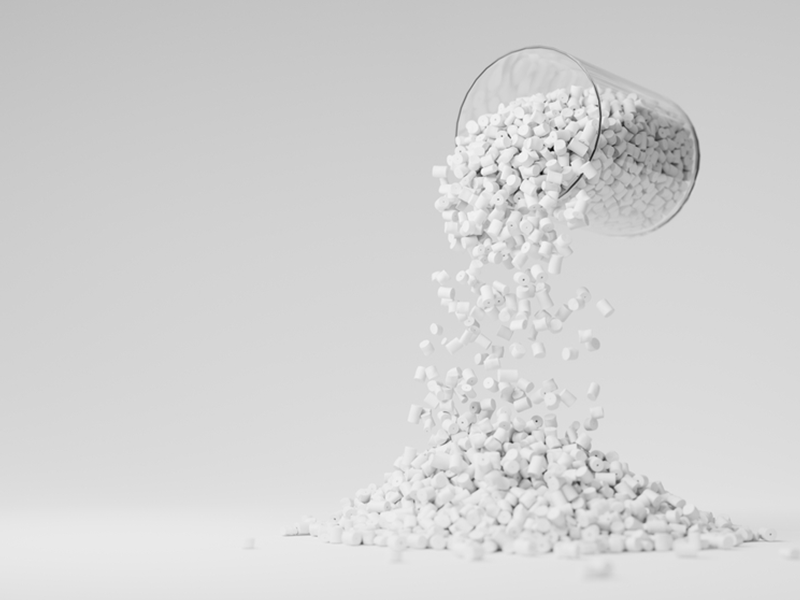
In the plastics value chain, white is often mistaken for simplicity. But in reality, white is one of the most technically demanding outcomes a polymer processor can achieve. A slight variation in brightness or dispersion can instantly expose inconsistencies in raw material quality. This is why white masterbatch is not just treated just as a colour solution. It is a benchmark of manufacturing expertise.
Behind every bright container, appliance panel, medical device or packaging film lies the work of white masterbatch manufacturers who operate with chemistry, optics as well as process engineering. Their role is not just to make plastics white. This is the biggest misconception. Their work is to control light behaviour, mask variability, ensure durability and deliver repeatable performance at industrial scale. Understanding this world offers a deeper view into how modern plastic products achieve consistency.
White in plastics is not a single shade but a performance spectrum. From whites used in rigid containers to whites required in films and sheets, each demands a different balance. Achieving this balance consistently is the core challenge addressed by white masterbatch manufacturers.
Unlike darker colours, white exposes every inconsistency. This makes white masterbatch manufacturers a critical partner in industries where visual uniformity and surface quality are non-negotiable.
White masterbatches must deliver:
- Consistent brightness across batches
- High opacity at optimal loading levels
- Minimal impact on mechanical properties
- Stable performance during high-temperature processing
Meeting all these requirements simultaneously requires deep control over formulation variables, compounding technology and quality testing.
White masterbatch plays a foundational role across multiple segments of the plastics industry for functional as well as aesthetic purposes.
In packaging, white provides product protection by blocking light exposure while offering a clean, premium appearance. In appliances and consumer goods, it enhances surface finish and masks internal structures. In healthcare, white plastics communicate hygiene, safety and sterility. In construction and infrastructure, they contribute to heat reflectivity and long-term durability.
Across all these sectors, white masterbatch manufacturers must make formulations to suit specific polymers, processing methods and end-use requirements, making standardisation a challenge and customisation a necessity.
Leading white masterbatch manufacturers are investing heavily in compounding systems and process optimisation to achieve uniform dispersion without degrading the polymer or pigment. This precision directly impacts production efficiency for processors downstream.
Sustainability, too, is reshaping expectations across the plastics industry and white masterbatch is no exception. Manufacturers are increasingly required to support recycled content, reduce material usage and ensure compatibility with circular economy models.
White masterbatches play a critical role in enabling recycled plastics by:
- Masking colour inconsistencies in recycled polymers
- Restoring brightness and appearance
- Improving consistency across variable feedstock
At the same time, formulations must be designed to avoid interfering with recycling processes. Advanced white masterbatch manufacturers are now focusing on optimising pigment loading and carrier selection to support recyclability without sacrificing performance.
While standard white grades exist, most applications demand personalised solutions. Processing speeds, mould designs, wall thicknesses and recycled content levels vary widely across manufacturers.
This has shifted the role of white masterbatch manufacturers from product suppliers to collaborators working closely to fine-tune formulations that perform reliably under specific production conditions.
As brands become more quality-conscious and consumers more visually discerning, expectations from white plastics continue to rise. Gloss levels must be controlled, yellowing must be prevented and consistency must be maintained across geographies.
This has pushed white masterbatch manufacturers to invest more in R&D, testing infrastructure and formulation expertise, raising the overall technical bar for the industry where the innovation will focus on:
- Higher efficiency pigments
- Improved recyclability compatibility
- Reduced environmental impact
- Enhanced process stability
White may appear simple, but inside the world of white masterbatch manufacturing lies some of the most advanced material engineering in the plastics sector. As applications grow more demanding and expectations rise, the expertise of white masterbatch manufacturers becomes increasingly critical. In an industry where details define outcomes, white masterbatch stands as proof that excellence often hides in plain sight.
- How Plastiblends Brings Colour Masterbatches to Life
- Masterbatches: The Backbone of Plastics
- How Masterbatches are Transforming Indian Plastic Industry
- White and Black Masterbatches Define More Than Colour
- How Flexible Plastic Packaging Is Redefining Consumer Convenience
- The Role of Black Masterbatch Manufacturers in Modern Plastics
- The Role of Filler Masterbatches in Effective Cost Control and Beyond
- Why White Masterbatch Manufacturers Are Key to Packaging and Product Aesthetics
- Inside the World of Flexible Plastic Packaging – Trends and Technologies
- The Role of Carbon Black Masterbatch in Modern Plastics
- From Automotive to Agriculture: Why Black Masterbatch Remains in Demand
- 5 Trends Transforming the Rigid Plastic Packaging Industry in the Long Term
- How Automotive Plastic Additives are Revolutionising Car Components
- Inside a Masterbatches Manufacturer’s Lab: The Science of Colour and Performance
- The PET Masterbatch Advantage in Modern Packaging
- The Rise of PP Masterbatch and How It’s Transforming Modern Manufacturing
- A Deep Dive into Carbon Black Masterbatch: Science, Applications & Innovation
- Inside the World of White Masterbatch Manufacturers
- The Real Reason Flexible Plastic Packaging Continues to Outpace Other Formats
- How Plastic Masterbatches Enable Consistency in an Inconsistent Market
- Thermoplastic Compounds and the New Definition of Material Flexibility
- Plastic Compounds and the End of Single-Property Plastics
- Additive Masterbatch Innovations Transforming Thermoplastic Compounds and Cable Insulation
- Flexible Plastic Packaging Explained: How Plastic Compounds and Masterbatches Drive Performance
- Inside Pharmaceutical Packaging: Why Additive Masterbatch and Colour Masterbatch Are Non-Negotiable
- The Science of Strength: Carbon Black Masterbatch, Conductive Masterbatch and Advanced Plastic Compounds
- Inside the Growth of Filler Masterbatches: Where Cost Efficiency Meets Performance in Plastic Compounds
- The Evolution of Plastic Masterbatch Manufacturers in India: From Commodity to Innovation Leaders
- Thermoplastic Compounds: The Backbone of Next-Gen Plastic Masterbatch Manufacturing
- White Masterbatches and the Science of Premium Aesthetics in Plastic Products
- From Concept to Component - How Engineering Compounds Are Redefining Material Performance Across Industries
- Invisible Protection - How Antioxidant Masterbatch Extends the Life of Plastics in High-Temperature Applications
- The Shift Toward Lightweighting: A Competitive Edge for Rigid Plastic Packaging Manufacturers
- What Automotive OEMs Look for in Black Masterbatch Manufacturers in 2026
- Colour Masterbatches Are Becoming a Design Language in Manufacturing
- Engineering Compounds: The Backbone of Modern Plastic Applications
- How Smart Compounding is Shaping Everyday Products
- Why the Automotive Industry Relies on Specialised Plastic Compounds Today
- Conductive Compounds in Automotive Electronics: Meeting the Demands of EV Components
- How Rigid Plastic Packaging Manufacturers Are Adapting to India's New Recycled Content Regulations
- How to Choose the Right PP Masterbatch for Packaging, Automotive, and Textile Industries
- What Are Thermoplastic Compounds and Why Do They Matter?
- Automotive Compounds: What Makes Modern Vehicles Lighter, Safer and More Durable
- Beyond Colour: How Masterbatch Producers Are Driving Material Performance
- Heat, Processing and Performance: Why Antioxidant Masterbatch Is Essential
- How Flexible Plastic Packaging Manufacturers Improve Products' Shelf Life